UA
 RU
 EN
 Google
E-commerce
CBD products in the UK
134 purchases at $26.42 and 567% ROAS on a $3,539.87 budget.
$3,539.87Read→
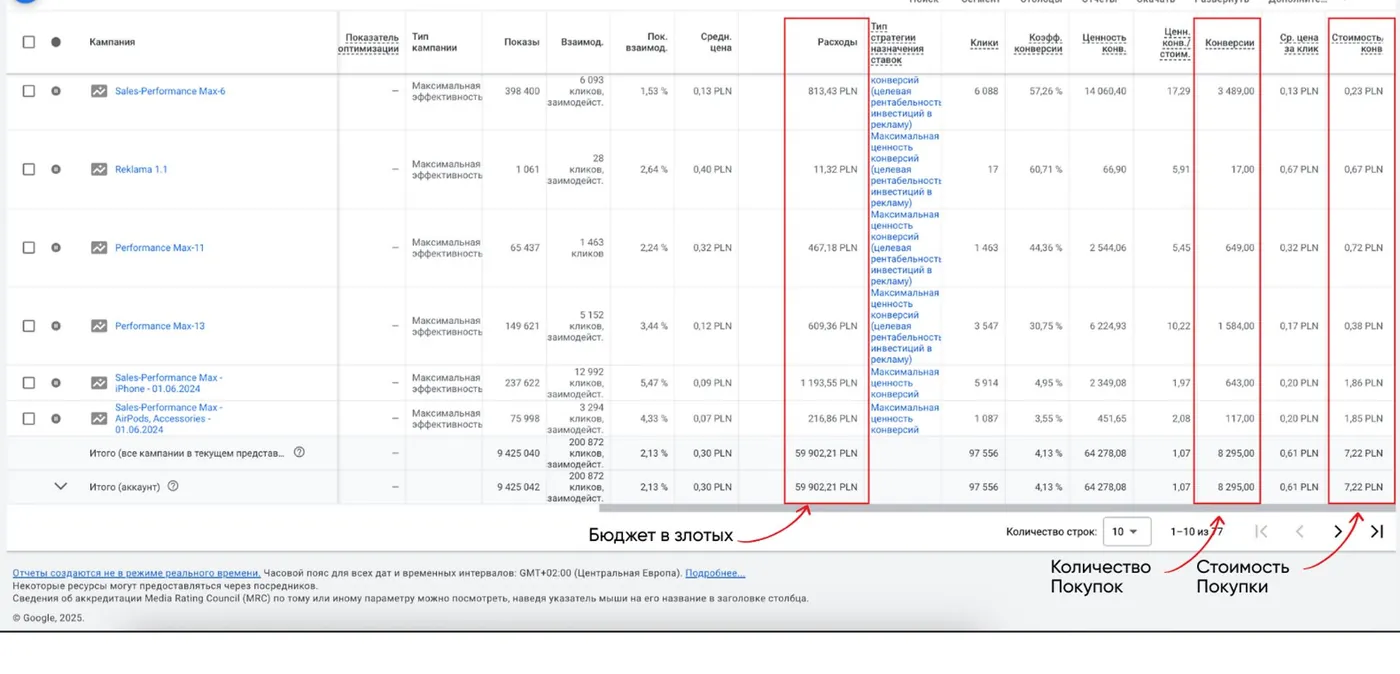
A Search → Performance Max → Shopping setup delivered 8,295 target actions at $1.92 on a $15,907 budget.
Cost per result = total budget ÷ number of results.
We promoted sales of iPhones, MacBooks and related categories in the Polish market. The task wasn’t just to gather traffic but to build a system: first accumulate quality search signals, then switch on algorithmic scaling and hold the cost per target action. It was also important to interpret the optimization event correctly: in the account, the conversion is labeled a “purchase”, but in fact it’s a lead request followed by a call from the sales team. So the 8,295 are leads with clear purchase intent, not paid orders.
We started with Search campaigns: capture existing demand, check query and ad quality and accumulate the first conversion data without expanding reach prematurely. Performance Max wasn’t switched on right away — first the account was brought to its first 100 target actions so the auto-strategy had a base to learn from: conversion history, clear audiences and confirmed “query → ad → landing page → action” paths. Only then was PMax added to scale volume beyond pure search demand, and once it stabilized, Google Shopping was switched on.
Product specifics were handled not by cycling through banners but by structure: Shopping and PMax showed users a specific product with its price, so a single visual burning out stopped being a bottleneck. Search ads relied on exact query matching — in a category where people search for a specific model, a vague message always loses.
Optimization ran in cycles of roughly every 7–8 days. Search demand was monitored separately: query relevance and traffic distribution across commercial categories were checked so the budget didn’t go to informational or random interest. The order in which tools are switched on matters more here than the set of tools — PMax on an empty account learns from noise, PMax on 100 conversions learns from signal.
30-day projection at the actual cost per target action of $1.93 from the account export.
A $15,907 budget delivered 8,295 target actions at $1.92 — the largest-scale and most CPA-efficient project in this collection. The key to the result is the sequence of tools, not their number: Search accumulated signal, PMax scaled, Shopping strengthened the product part of the funnel.
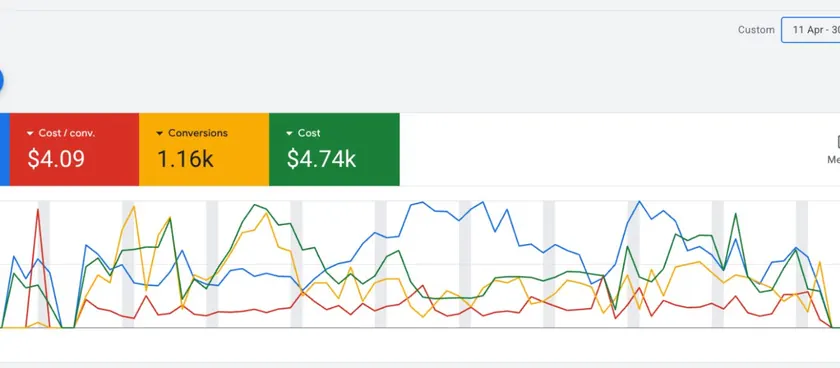
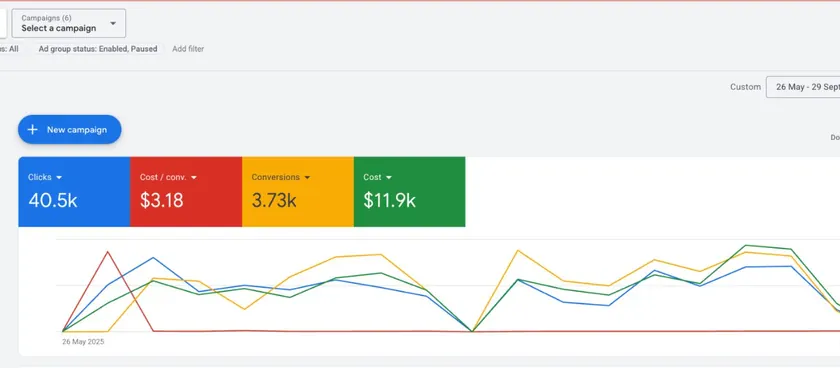
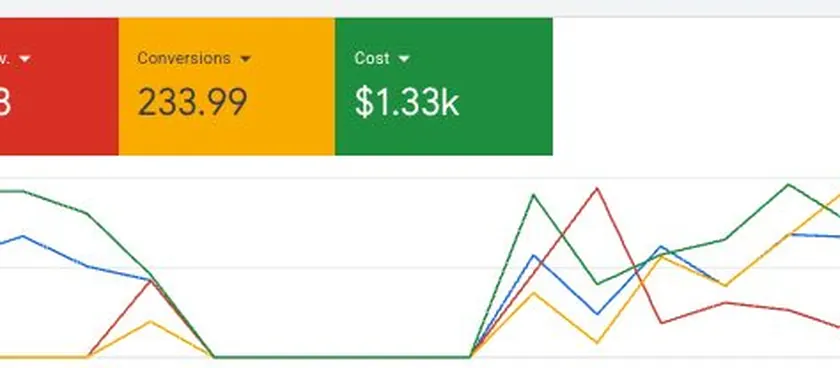
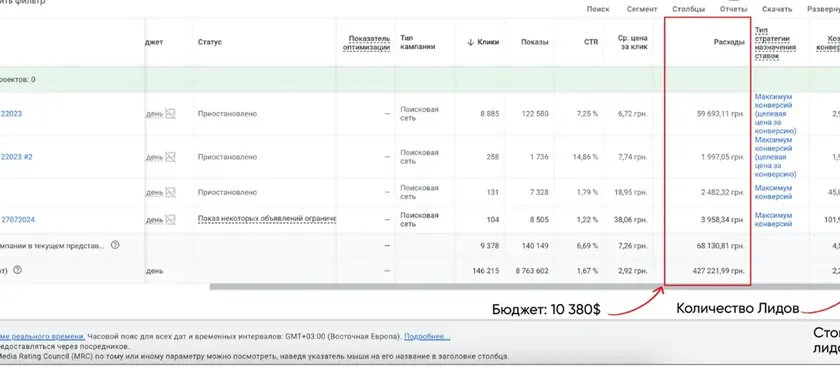
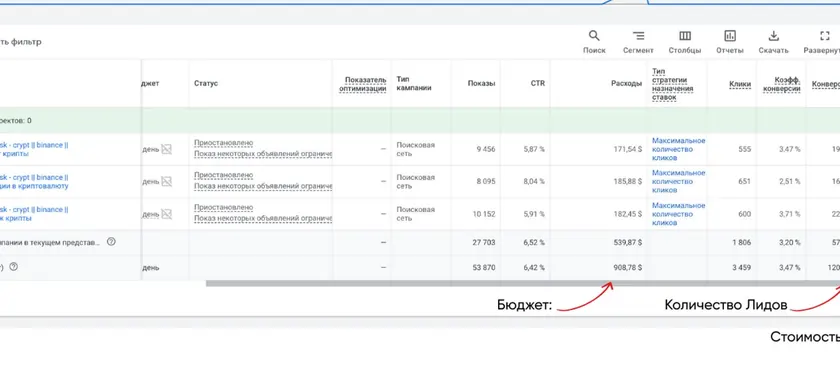
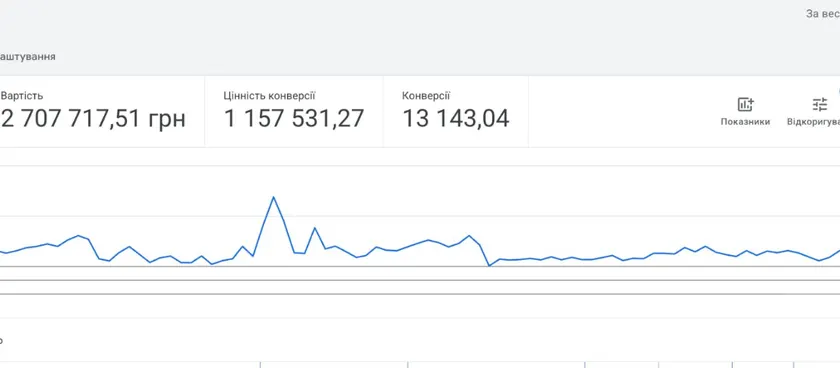
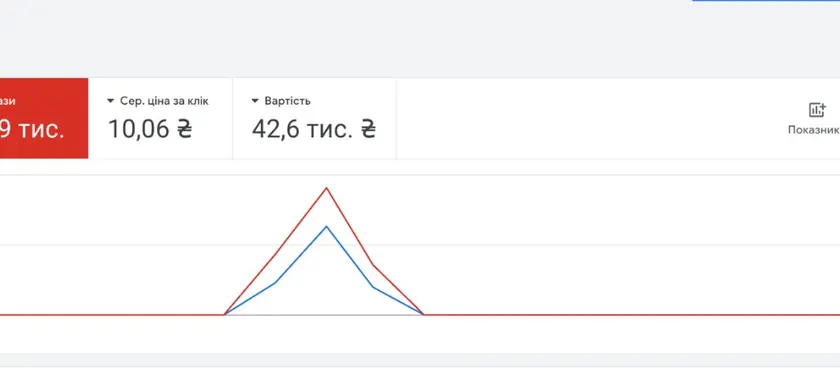
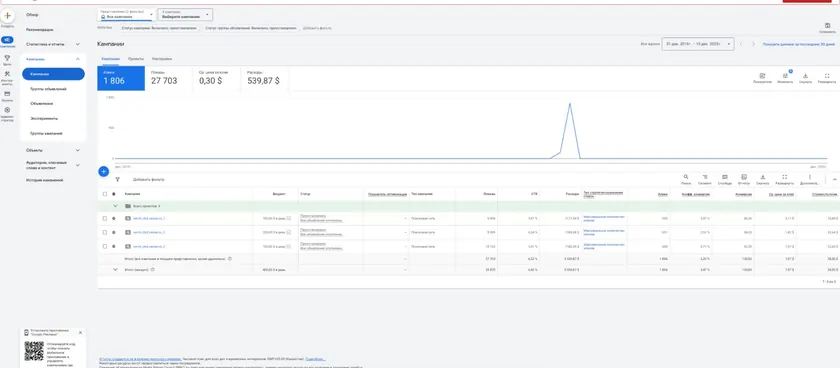
Ad account screenshot from the original report. Resolution was upscaled and local contrast and sharpness corrected, with no data added. The launch strategy has been reconstructed; confirmed figures are kept separate from the projection model.
We’ll review your ads, show you where you can grow and give you a launch plan — free of charge.